


Choosing the right backpack to commute with can take bags of time. And if your commute includes more than just a car to the office car park, the wrong bag can leave you feeling tired, frustrated and even in some discomfort at the end of a day’s work.
But as well as being comfortable and practical a backpack needs to last, and look good, too. There are bags full of choice when it comes to commuter backpacks, rucksacks, whatever we want to call them but here are a few we have personally tested over a prolonged period of time. We’ve cycled with them, traveled by plane, train and car with them and walked miles in doing so.
To be completely transparent, we do not receive any commission for this piece, and these backpacks were personally requested by us to test. The backpacks were provided by each brand's PR department. We will not receive payment for featuring any of them. Our assessments are our own.
USD-priced bags. UK buyers should factor in shipping and any applicable import duties when ordering direct. Check brand websites for current UK retailer availability.
Backpacks
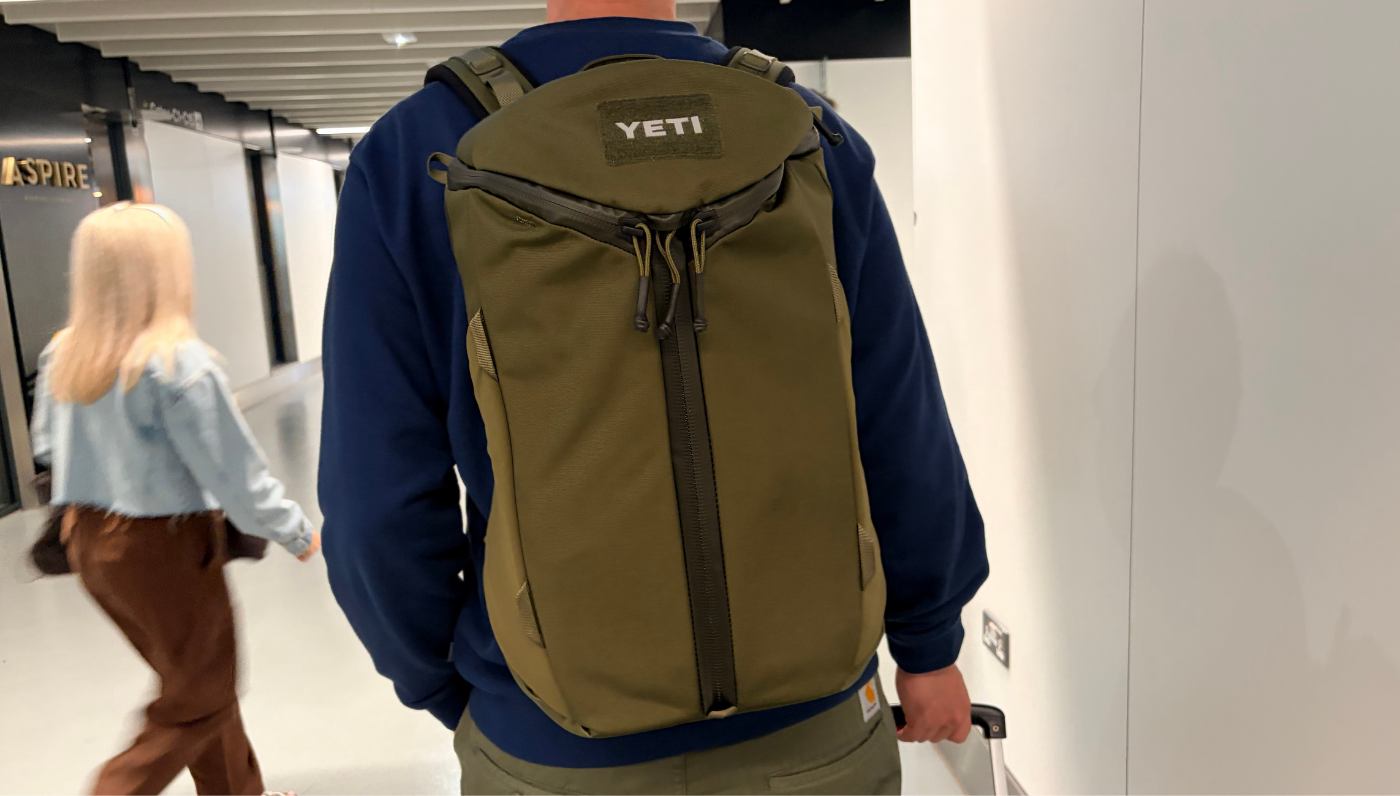
YETI Ranchero™ 22L — $279 / £225
New for 2026
YETI built its reputation on coolers. The Austin, Texas brand has spent the last decade turning that same philosophy, make it once, make it properly, toward everyday tools such as the backpack. The Ranchero 22L, new for 2026, is the clearest expression yet of what a YETI backpack means in practice.
The first thing you notice is that it doesn't collapse. Set it down on a train floor, for instance, and it stays upright, thanks to the GroundControl™ structured base. I took the Ranchero on a trip back to the UK and became that guy demonstrating to family and friends how it stands erect on the ground; it really is very satisfying.
The TuffSkin™ Nylon exterior has a matte, textured finish. How to describe it? Well, imagine picking up your drycleaned shirts to realise they’d dialled up the starch by 100x, that’s what it feels like. And for that reason, it holds its shape whether it's packed for a full day or carrying only a laptop and a water bottle. For me, that is a big plus!
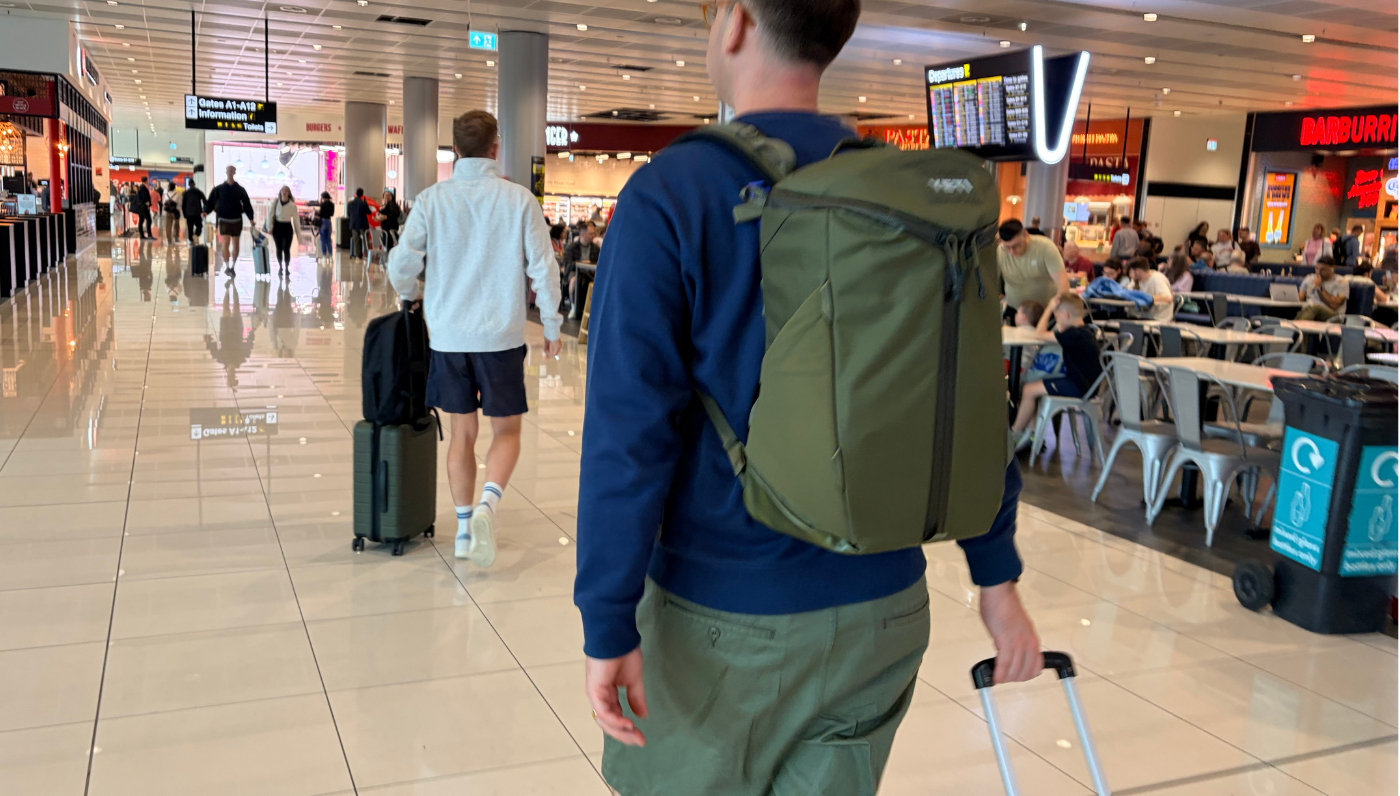
Another very well designed feature is the RipZip opening. It’s a pull-tab system that opens three compartments simultaneously in a single motion, or independently if you only need one. In practice it means you can get your laptop out at security without unzipping three separate pockets, only opening one corner of the backpack for your wallet, or utilising the full zip down the centre to reach an item at the bottom without sharing your whole life with everyone.
Inside there’s a padded 15-inch laptop sleeve, dual hydration holsters on the exterior (sized for a serious water bottle), and enough slip pockets to give everything a home. The shoulder straps are contoured to sweep away from the lower back, that’s YETI for what physical therapists would call lumbar clearance, and they do the job on longer carries without cutting in.
The honest caveats: at 1.5kg empty, this is not a lightweight option. The 22L capacity suits a day's essentials rather than a week away. And $279 / £225 is a serious number for a bag in this size range. But YETI builds to outlast, and the three-year warranty reflects genuine confidence in that. A 27L version is available for those who regularly carry more.
Bottom line: Buy it if you want the last everyday bag you'll need for the next several years. It performs on a red-eye complete with a luggage strap, on a cycling commute, and in a conference room, without looking out of place in any of them.
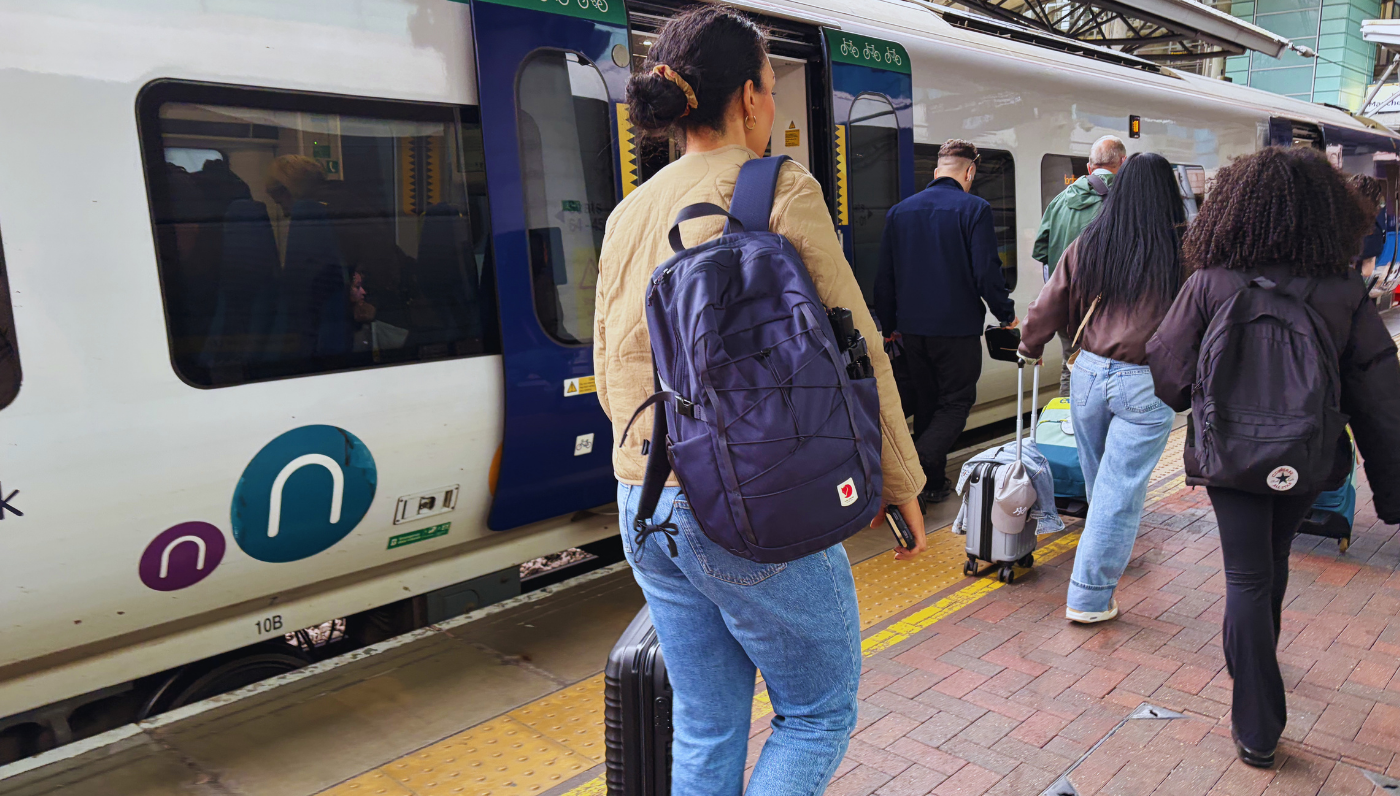
Fjällräven Skule 28 — $120 / £95
The Swede that could outperform bags twice its price.
There is something almost confrontationally understated about the Fjällräven Skule 28. No proprietary opening systems. No branded hardware. No bold typographic logos. Just a well-proportioned daypack in recycled Oxford polyester that, after prolonged testing, Kelcie is very happy to call it her go-to commuter backpack going forward.
Fjällräven has been making bags in Sweden since 1960. Their first product was a rucksack with a built-in aluminium frame. It was designed, in the founder's words, to be carried by anyone, not just the physically strong. That ethos runs through everything the brand produces, and the Skule is no exception.
At 750 grams, it is the lightest bag in this test by a significant margin, less than half the YETI, less than a third of the Ortlieb Vario. And at 28 litres, it offers the most capacity of any bag here. If you are the commuter who needs to carry a full change of clothes, a 15-inch laptop, lunch, and the accumulated miscellany of a working day, this one fits the bill.
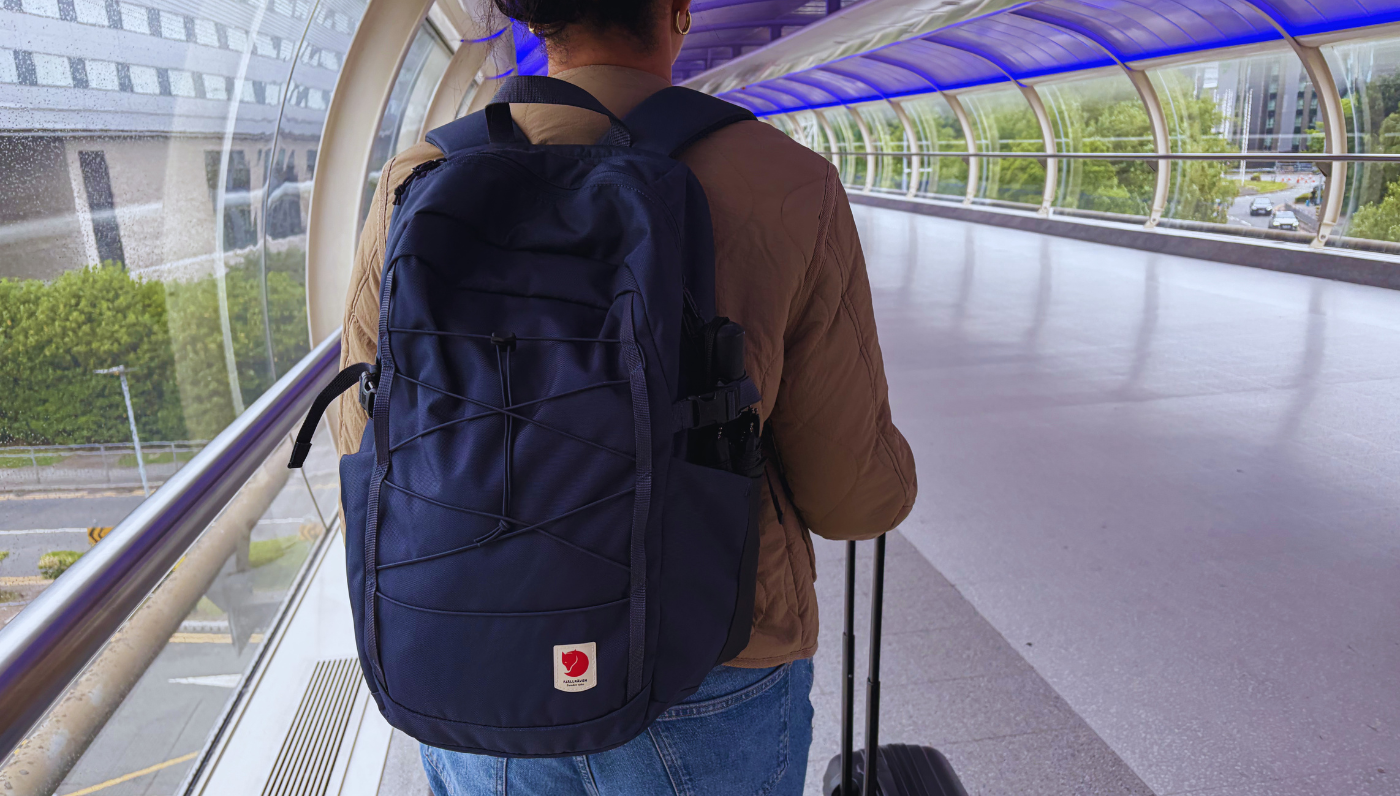
The fabric is 100% recycled polyester Oxford, produced without PFAS. It is not waterproof in the technical sense, but in our testing it handled sustained British rainfall without requiring a cover. The lining is also recycled polyester. Fjällräven has eliminated the fluorinated chemicals that have become a liability for outdoor brands of late; the Skule's water repellency comes from wax-based treatment instead.
Organisation is logical, too. The main compartment has a padded 15-inch laptop sleeve; the front compartment opens wide and flat, with interior mesh pockets and a zip; the top pocket handles quick-grab items. A hydration port accommodates a bladder tube. The back panel is air-mesh padded. There is a detachable chest strap and a detachable hip belt, features you don't expect at this price, and which make a real difference when the bag is fully loaded.
Two things to know going in are that the care instructions say spot-clean only (no machine wash, no dry cleaning), and this is a bag that rewards packing well rather than overfilling.
Bottom line: If you spend $279 on a backpack and you don't cycle to work, you are paying for things you may not need. The Skule 28 does the same job at $120 / £95, weighs almost nothing, and is made by a company with six decades of reason to be trusted.
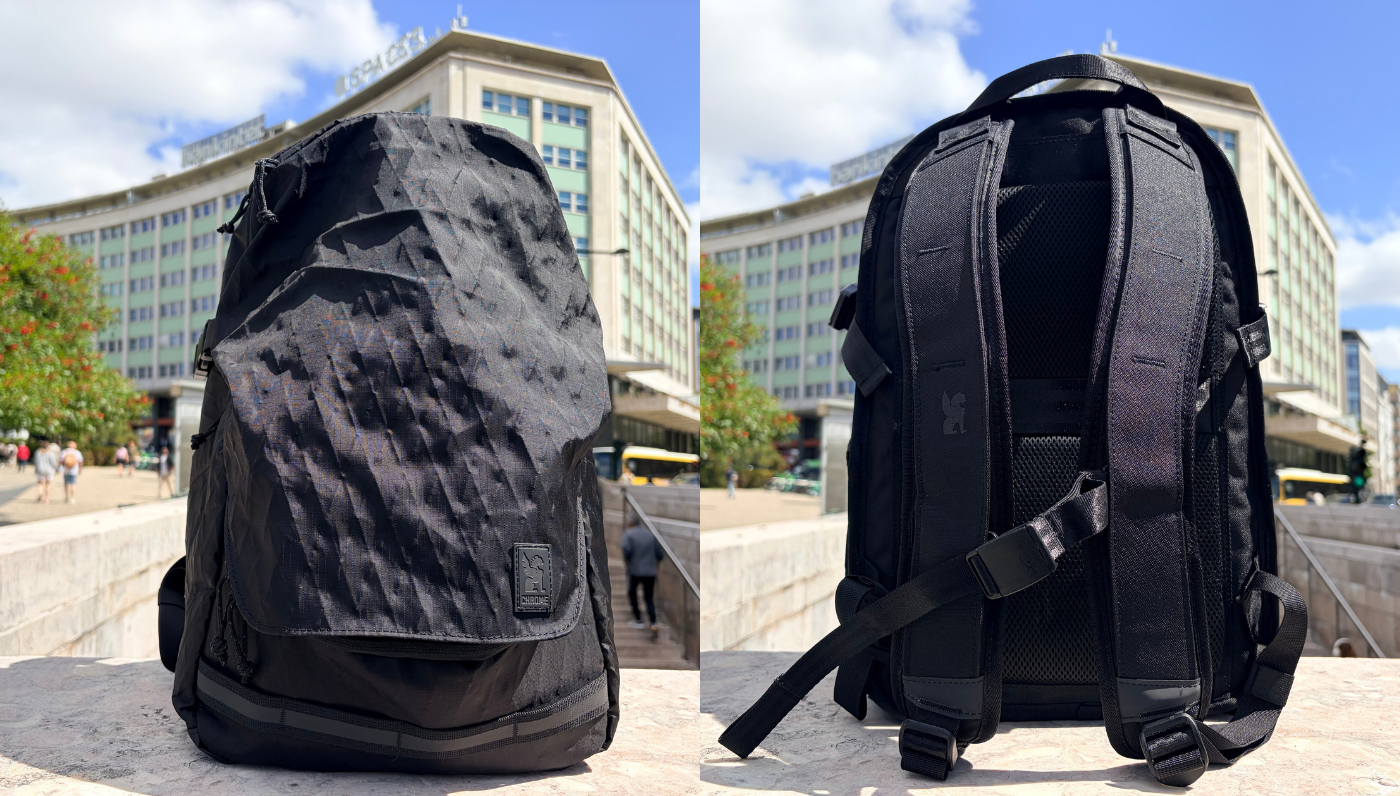
Chrome Industries Extlek 24L — $120 / ~£95
Built by cyclists, for cyclists, in a factory that has clearly never heard the word "compromise."
Chrome Industries came out of San Francisco's bike messenger scene in 1995. Their first bag was a messenger bag with a seatbelt buckle. Thirty years later, the buckle is still there, the commitment to urban cycling as a serious daily mode of transport is still there. The Extlek 24L was designed by their Japan team for what they call the daily grind. In Chrome's vocabulary, this means city cycling to a professional destination, every day, in all conditions.
The materials are serious. The standard black version uses 1680D Ballistic polyester with PU backing; the same fabric specification used in protective military equipment. The Black X version adds a 500D TPE tarp outer and 1050D recycled nylon, making it substantially more waterproof and arguably the smarter choice for anyone who rides in rain regularly. Both carry Chrome's lifetime warranty.
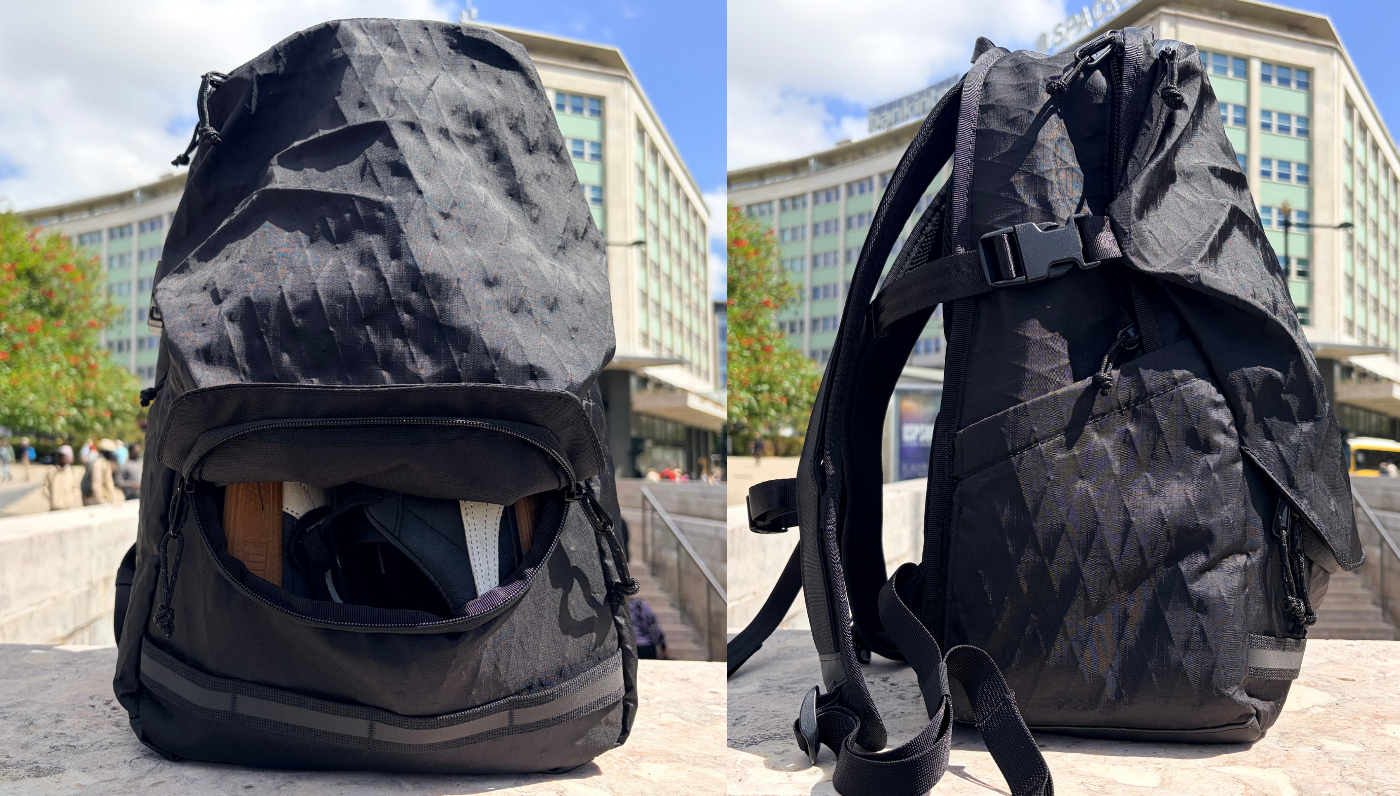
The bag's most original feature is a separate lower flap pocket. This is a collapsible compartment at the base of the pack, designed for a pair of shoes or a packed lunch, with a removable liner that pulls out for cleaning. If you’re cycling into work with a change of footwear, this is a genuinely useful compartment: shoes go in the bottom, laptop and work gear go in the main compartment, and the two never meet. The padded, removable laptop sleeve fits most 15-inch machines.
Elsewhere, there are dual exterior water bottle pockets in stretch mesh, reflective daisy-chain webbing on the front panel (for attaching lights, carabiners, or accessories), a breathable back panel with a luggage pass-through, and a removable sternum strap. The overall silhouette is deliberately low-profile — nothing that reads as "I just got off a bike" when you walk into a building.
A candid note on reviews: the Extlek is a newer product with a modest review count, and real-world feedback flags two recurring issues that I agree with: the lower front pocket occupies more of the main compartment's internal volume than you'd expect when fully loaded, and the sternum strap adjusts stiffly. These are refinements on a strong foundation rather than structural problems, and Chrome's track record on iteration is good.
UK buyers: Chrome's distribution in Britain is available through select stockists but can be inconsistent. If ordering direct from the US, factor in shipping and any applicable import duties.
Bottom line: The Extlek is a quality backpack for the person who cycles, commutes to the office, doesn’t want to purchase a mainstream brand, and could pass by the skatepark after the day’s work without looking a bit weird.
The Panniers
A note on how these work, and why they might solve a problem you've been living with.
I have to include a few panniers. For one thing, I hate a sweaty back after a commute to work. But, for the most part panniers are made to stay on the bike, they are bulky or uncomfortable to carry.
If you have a Brompton, their Borough bags are fantastically made and sit superbly well on the Brompton carry block, allowing 10kgs of luggage to be hauled across town very easily. Yet, turn them into a backpack or a shoulder bag and they don’t feel so great with the hardware sticking out and balancing all out of kilter.
The three bags below bridge that gap. Each one functions as a proper commuter backpack when you're walking. Each one clips onto a standard rear rack when you're riding. And each one has thought carefully, with varying degrees of success, about what happens to the shoulder straps and back panel while they're on the bike.
The mounting systems on all three are derived from or compatible with the German-made Rixen & Kaul KLICKfix standard, which clips onto rack tubes between 6 and 16mm in diameter. That covers the vast majority of commuter bikes, Dutch city bikes, touring bikes, and modern e-bikes on both sides of the Atlantic. None of the bags in this test wobbled, swung, or gave us any reason to worry about accidental release during testing.
What distinguishes the three bags is how they handle the transition.
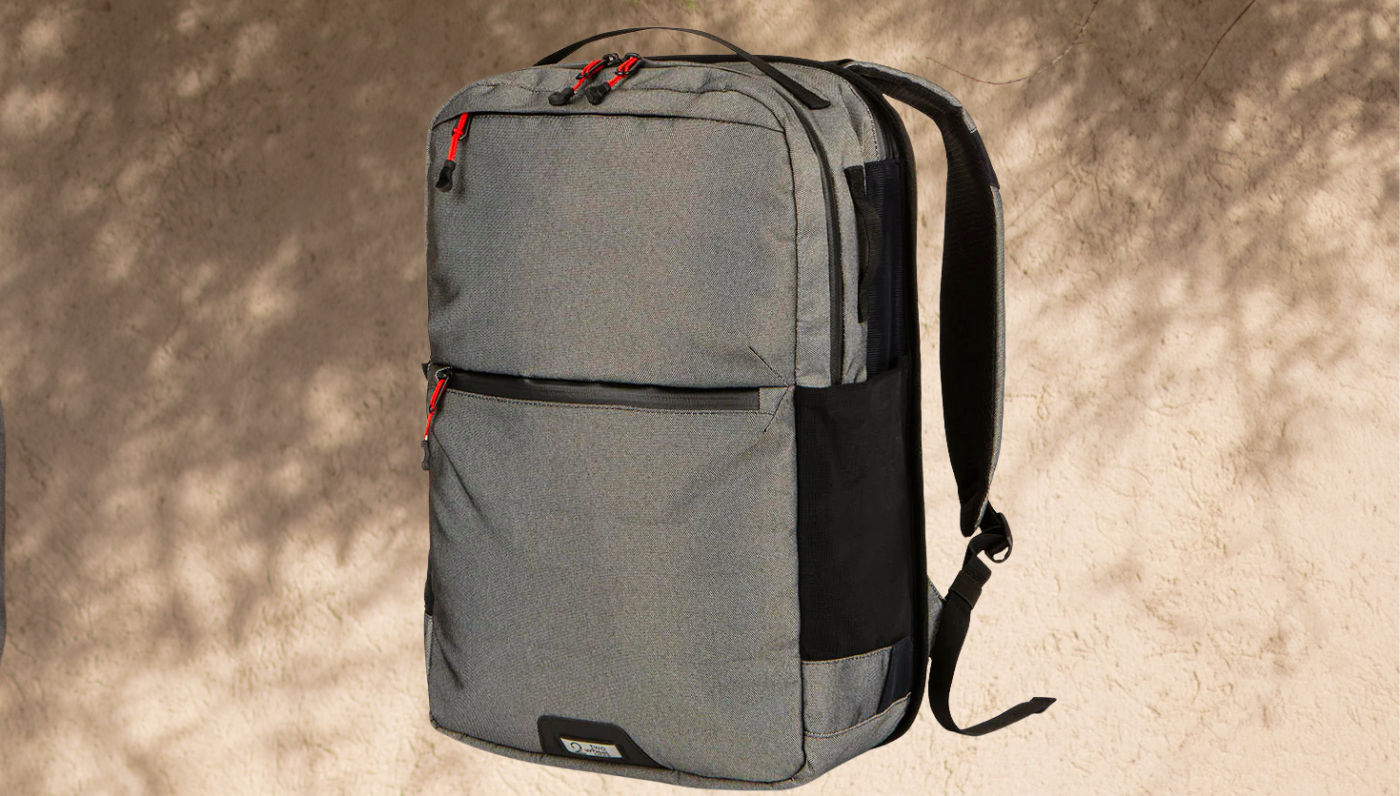
Two Wheel Gear Inverter Pannier Backpack 24L — $220 / ~£173
The smartest solution to the problem everyone who cycles to work has.
Two Wheel Gear is a Canadian company that makes nothing but cycling bags, which means they've had to take seriously every problem that cycling bags have. The most notorious of those problems, the one they built the Inverter to solve, is the one every urban cyclist has encountered. Imagine, you park your bike, unclip your pannier from the rack, and put a bag that spent forty minutes next to your rear wheel onto your clean back. The underside is grimy and now your shirt is too.
The Inverter's answer is a flip-panel design that reframes the problem entirely.
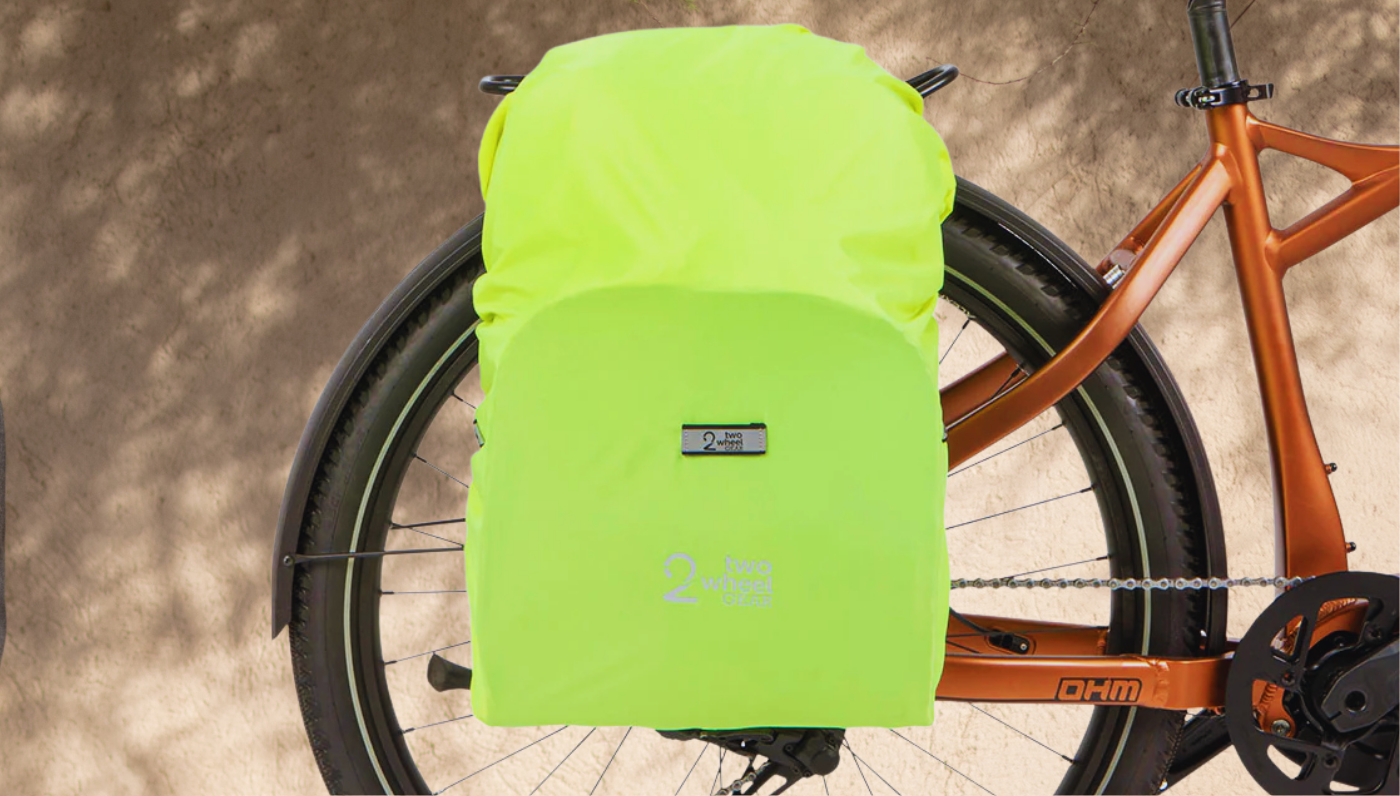
How the conversion works: The back panel of the bag, the side that carries the shoulder straps in backpack mode, unzips completely from the main body. You flip it to the front of the bag, where it covers the contents like a flap and deploys an integrated fluorescent rain cover over everything. The KLICKfix mounting hardware is now exposed on the back of the bag (the side that was against your back), and you place the bag on the rack and engage the central red spring latch until it clicks. A lower strap clips to the rack for additional stability. The whole operation takes about ten seconds once familiar.
So what does it solve? What I found was whilst in pannier mode, the shoulder straps and back panel are tucked away behind the front flap, sheltered from road spray, mud, and chain oil. When you arrive and convert back to backpack mode, the panel that goes against your back is the same panel that was covered during the ride. The surface that sat against the rack, now covered by the flap, stays away from your shirt. It is an elegant inversion, and in practice it works.
The bag itself is made from recycled 600D Polyester with TPU waterproof coating, manufactured in a bluesign® certified facility, a meaningful environmental credential. It carries a 17-inch laptop pocket (the largest in this test), a secondary padded sleeve, pen pockets, a key clip, mesh organisers, and two exterior zip pockets with expandable water bottle holders. The high-visibility rain cover doubles as a safety feature in low light.
The main real-world criticism, that the shoulder strap panel can swing forward inconveniently when you need to access the bag mid-ride while it's on the rack, is a genuine quirk. For most commuters though, I’d guess accessing the bag while it's clipped to the bike will happen rarely enough that this is a minor irritation rather than a dealbreaker.
At 1.77kg, this is the heaviest pure commuter bag in the test. The pannier hardware accounts for much of that.
Bottom line: If you cycle to work in smart clothes and currently arrive needing to change your shirt, this bag could change your routine. Nothing else in this test does what the Inverter does, as neatly.
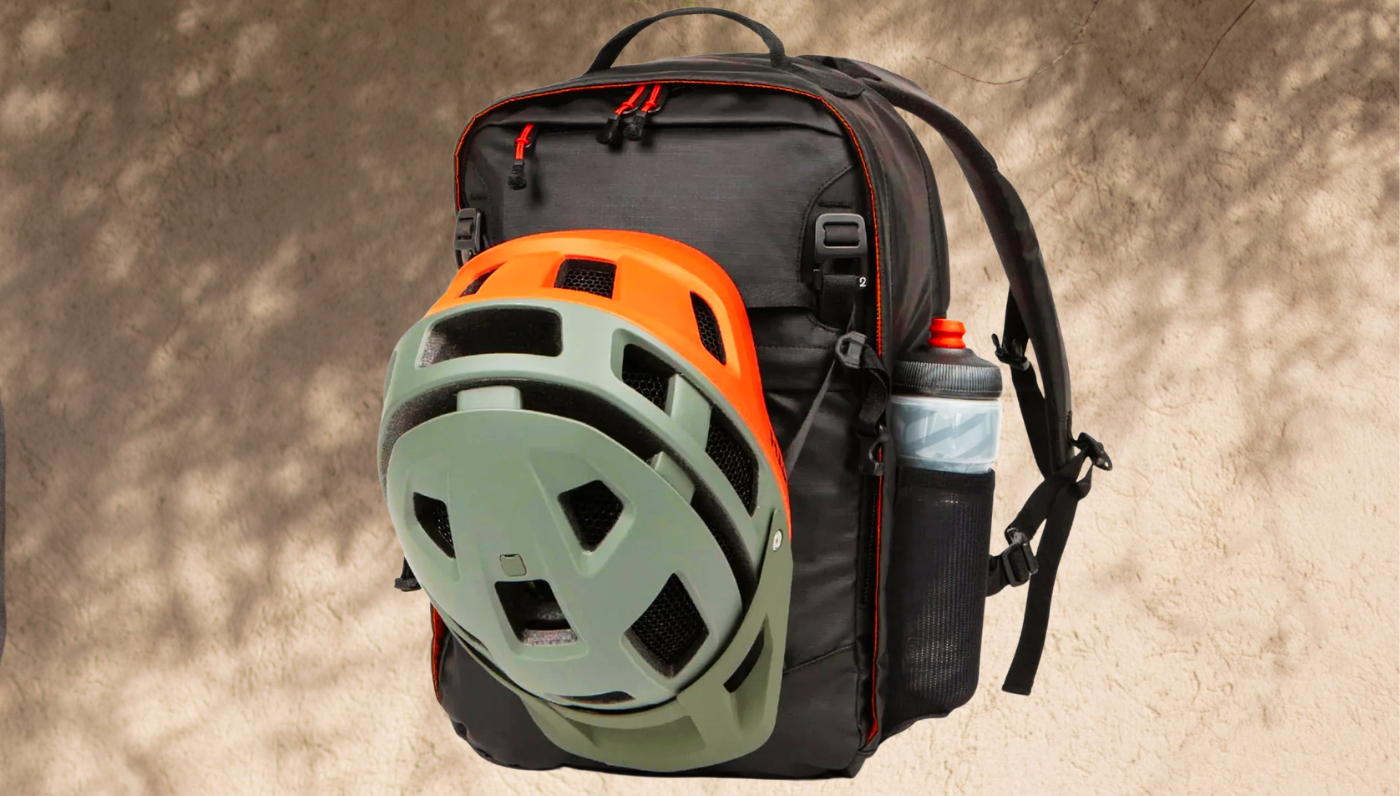
Two Wheel Gear Pannier Backpack Convertible 2.0 Lite 22L — $159 / ~£125
With 186 real-world reviews averaging 4.7 out of 5, it is the most validated bag in this test. It is also $61 cheaper than the Inverter and 500 grams lighter.
How the conversion works: The Lite uses a more conventional approach than the Inverter. The shoulder straps stow in a zip pocket on the bag's back panel. The KLICKfix Kompakt Rail hardware, built into the same back panel, engages directly with the rack. To mount you place the bag on the rack, press the red spring latch until it clicks, clip the lower stabiliser strap to the rack side. To convert back you pull the straps from the rear pocket, zip away the hardware, clip the strap buckles. Each direction takes under 15 seconds once you've done it a handful of times. The system fits rack tubes from 6–16mm, including oversized racks, and feels solid throughout.
.png)
The trade-off versus the Inverter is the one that matters for serious year-round cyclists. In backpack mode, the panel that sits against the rack sits against your back. For fair-weather cycling, this is usually fine. For those commuting through winter on wet British or Pacific Northwest roads, the Inverter's cleaner solution earns its premium.
The recycled 600D Poly Ripstop with TPU waterproofing is genuinely robust for its weight. An included high-visibility rain cover provides additional protection in pannier mode.
The Modular Attachment System allows a helmet to be clipped to the outside of the bag. Inside there’s a padded 15-inch laptop sleeve, a quick-access soft pocket for a phone or sunglasses, water bottle pockets with a strap for an umbrella or U-lock, and reflective detailing throughout.
The most consistent real-world complaint which I also encountered was an early fraying of the interior mesh pocket in the first weeks of use. Subsequent production appears to have improved this, but it's worth monitoring during the break-in period.
Bottom line: If you cycle to work in fair to mixed conditions and want a proven, practical convertible that won't require much thought, this is it. The Inverter is smarter; the Lite is easier to live with day-to-day as it is, well, lighter and considerably more affordable.

Ortlieb Vario 26L — $230 / £200
The German-engineered pannier can also be a genuinely good backpack.
Ortlieb makes waterproof bags in Heilsbronn, Bavaria. They have done so since 1979. It explains why the Vario's hardware fits together with a precision that makes every other pannier-backpack convertible in this test feel slightly approximate by comparison.
The Vario is built around a reversible flap system. One side of the flap covers the Quick-Lock mounting hardware; flip it and the same flap covers the shoulder straps and back panel.
In backpack mode, the hooks are invisible. In pannier mode, the straps are invisible. Neither set of components is ever visible in use, which gives the Vario a cleaner silhouette than any convertible bag of our experience; it reads as a backpack when worn and as a pannier when racked, without obvious compromise in either direction.
How it attaches to the bike: The version tested here uses Ortlieb's Quick-Lock 3.1 system. Rather than hooks on the bag engaging a rack tube (the conventional approach), QL3.1 uses studs fixed to the rack, into which the bag clicks from above. The result is a back panel entirely free of protruding hardware meaning nothing digs into your back when carrying. Mounting is one-handed: flip the flap to cover the straps, align the bag with the rack studs, press down until the latch engages well. Removal is equally fast, and the system can be locked with an optional anti-theft device for urban parking.

One practical note for prospective buyers is the QL3.1 system requires either a rack with integrated QL3.1 mounting points, or the separately purchased QL3.1 mounting set (~$40 / £30), which retrofits any standard rack. This is a one-time, tool-free installation and works on any rack tube up to 16mm. If you frequently switch between bikes like I do, or who want to skip the additional hardware, the QL2.1 version of the Vario ($200 / £178) mounts directly to any conventional rack tube from 8–20mm without extras. Both versions support loads up to 9kg.
The bag itself is PU-coated Nylon, rated IP64. This means dust-tight and protected against splashing water from all directions. It is not water-resistant. Though, in sustained, heavy rain, the contents stay dry. The closure is a roll-top rather than a zip, which is slower to access but absolutely watertight; a separate exterior zip pocket handles items you need quickly without opening the main compartment. The laptop compartment (14.2" × 9.7" × 1") fits most standard machines comfortably.
Padded shoulder straps, a chest strap, and an ergonomic TPU back panel make the Vario genuinely comfortable for extended carrying in backpack mode.
The five-year warranty, and Ortlieb's commitment to stocking spare parts for at least a decade after any product is discontinued, makes this one of the more defensible premium purchases in this category.
The caveats are that the roll-top takes longer than a zip. The QL3.1 version may require the separately purchased mounting set. And, at 1.48kg, the bag is heavier than the Two Wheel Gear options, though most of that weight is the hardware. And at $230 / £200, it is priced at the top of the pannier category.
Bottom line: The Ortlieb Vario is the most refined, most weatherproof, and most durable option in this test in terms of panniers. For the serious cycling commuter who wants to buy once and carry indefinitely, it is the answer.
The Verdict
The right commuter backpack is the one that solves your specific problem.
If you take the subway or the train or walk a mile to the office, and you want a bag that will last a decade and look right in every room you walk into, the YETI Ranchero is worth every dollar and pound of its price. If you want the same outcome at half the cost, the Fjällräven Skule 28 is a great option minus the ‘standability’.
If you ride a bike to work and want your bag on the rack rather than your back, the Ortlieb Vario is the most precisely engineered answer available. It’s genuinely waterproof, beautifully made, and built to last.
If you ride year-round through cities that don't believe in covered parking and you've had one too many grim days arriving with a dirty shirt, the Two Wheel Gear Inverter is the most innovative solution to the problem.
The Chrome Extlek is for the person who lives on a bike and works in an office and doesn't want the bag to look like either one is a concession to the other.
None of them will let you down. All of them will improve the commute. The question is which commute you're running.
All bags were provided by the brands' PR departments for independent testing. No commercial relationship exists with any manufacturer featured. All opinions are the authors' own. Pricing correct at time of publication; confirm current availability and pricing with retailers directly.