

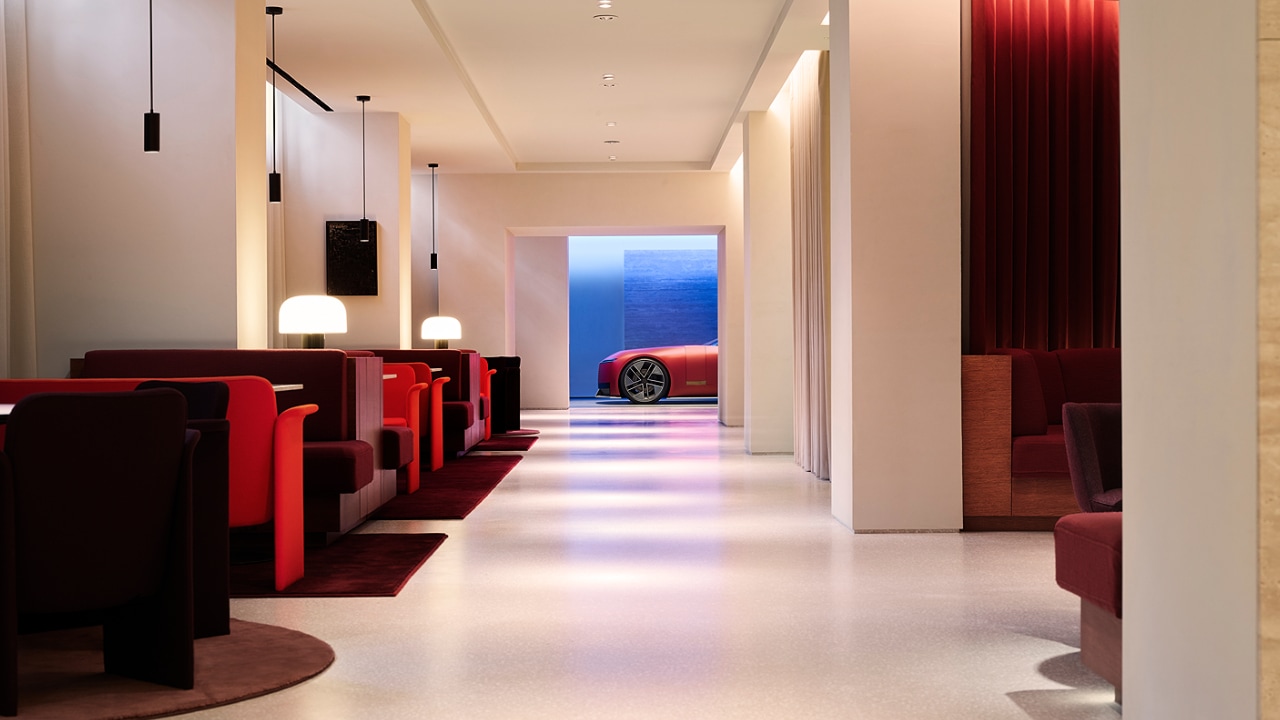

There are only two spaces for cars in Jaguar’s newly rebuilt Knightsbridge showroom. Most of the ground floor has been handed over to a restaurant.
It’s quite a decision for a car manufacturer in the middle of reinventing itself.
The flagship is, according to Dezeen, the only public showroom displaying Jaguar’s new Type 01 electric car. Yet the restaurant occupies more space than the cars.
The opening comes two years after Jaguar’s divisive 2024 rebrand, which replaced much of its familiar visual identity and introduced the Type 00 concept at Miami Art Week. The Type 01, its first production electric car of this new era, was unveiled in New York on 6 October 2026.
Now Jaguar has a physical space in which to introduce that identity to the public.

A restaurant with a car showroom attached
At the centre of the ground floor is Café Eighty-One, a restaurant developed with Michelin-star-winning chef Michael O’Hare, best known for his former Leeds restaurant, The Man Behind the Curtain.
Rich red fabric defines the interior, with upholstered benches and booths positioned along the building’s front facade. The colour references Knightsbridge’s red-brick architecture.
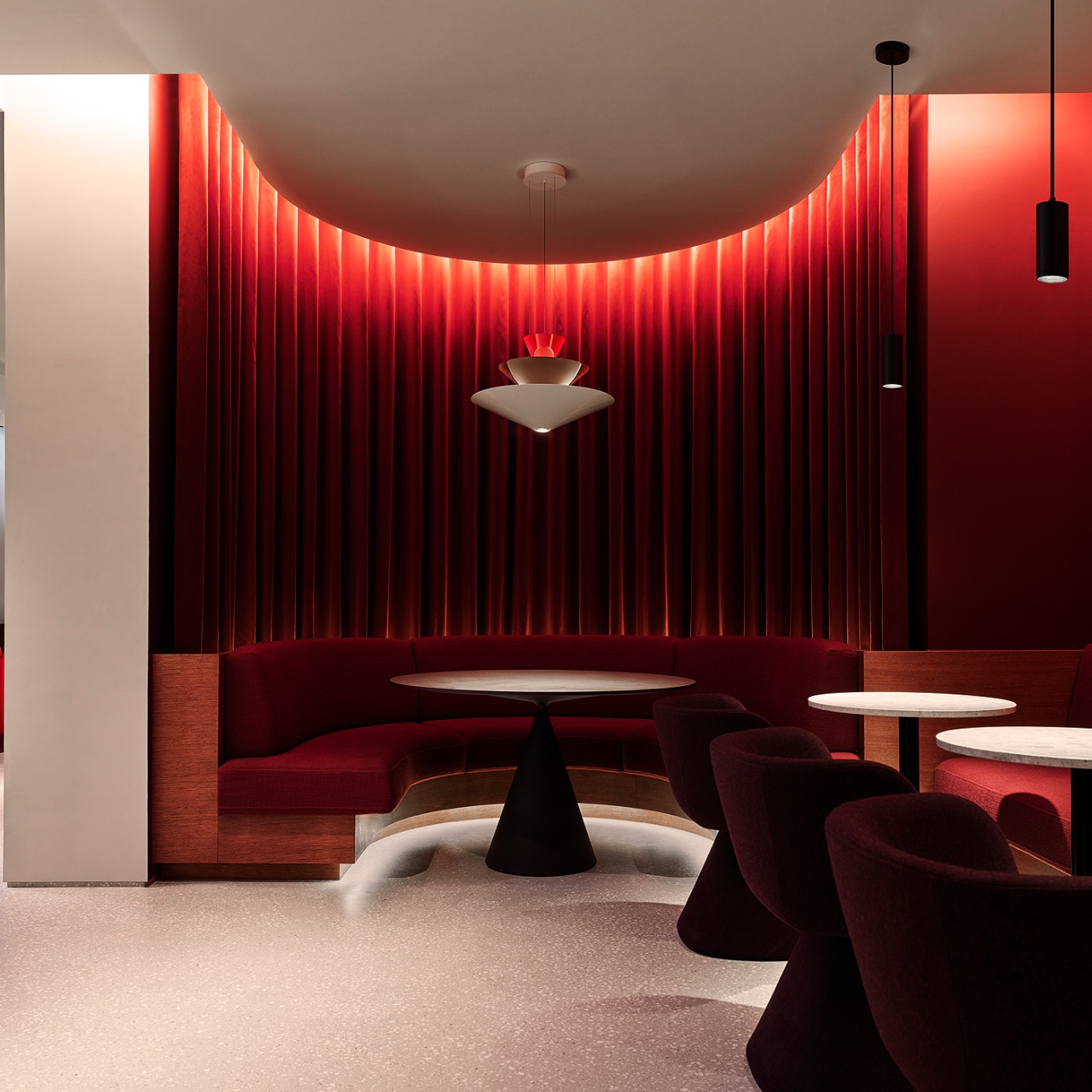
Rather than adding a coffee counter to make buying a car more comfortable, Jaguar has given hospitality the largest share of its ground floor.
“Food is one of the most universal forms of connection,” Nick Rolls, senior manager of Jaguar Land Rover’s spatial brand design team, told Dezeen.
The restaurant gives people a reason to visit without shopping for a car. Lunch with friends, a meeting or an afternoon spent at Café Eighty-One puts Jaguar into occasions that have nothing to do with car ownership.
It also gives the brand something conventional showrooms struggle to offer: a reason to come back.
Elsewhere, the building’s design draws directly from the Type 01. Travertine, tactile textiles and warm brass reference materials inside the vehicle, while sculptural shapes and geometric forms extend its design language into the architecture.
Rolls said his team wanted “to create a physical expression of the new Jaguar.”
The 2024 rebrand played out largely through campaigns, a new visual identity and the Type 00 concept car. It attracted considerable attention, much of it critical.
Knightsbridge makes the brand’s new direction tangible. The materials, furniture and architecture introduce Jaguar’s design philosophy to visitors who may have little interest in the technical details of its electric cars.
The sale moves downstairs
The traditional showroom hasn’t disappeared. It has moved into a less prominent part of the building.
A lower level contains private areas for sales meetings and vehicle customisation, including the Design Vault, a room finished entirely in deep navy blue.
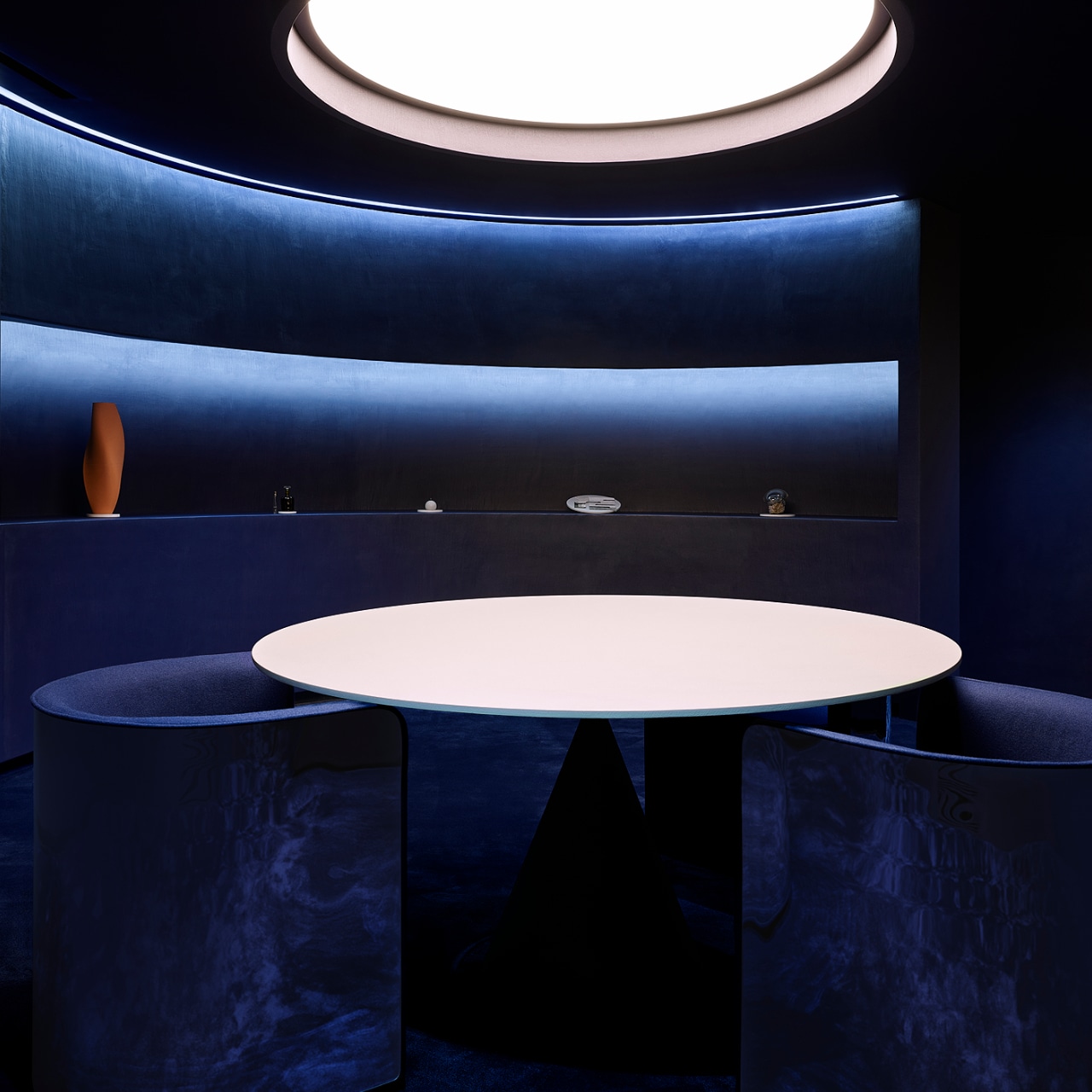
The division is deliberate. Upstairs is for hospitality and discovering the brand. Downstairs is where customers can discuss a purchase.
Jaguar isn’t the first car manufacturer to experiment with hospitality-led retail. Porsche’s Singapore Studio, which the goods examined in 2024, also incorporates a café, co-working areas and event spaces.
But Jaguar’s approach comes at a particularly important moment. The company is asking existing customers to reconsider a familiar British marque while attempting to attract an entirely new audience.
Hospitality gives it access to people who might never otherwise enter a Jaguar showroom.
The strategy is to increase dwell time, encourage repeat visits and associate Jaguar with a wider lifestyle built around food, design and culture. The restaurant introduces the brand through an experience people can enjoy without owning its products.
Whether that familiarity eventually translates into car sales is another matter. For now, Jaguar has committed most of its most visible retail space to building the relationship before the purchase.